When Art Walks Off the Wall and Onto Your Back: The Blake Mill x Lowry Evening
6-minute read
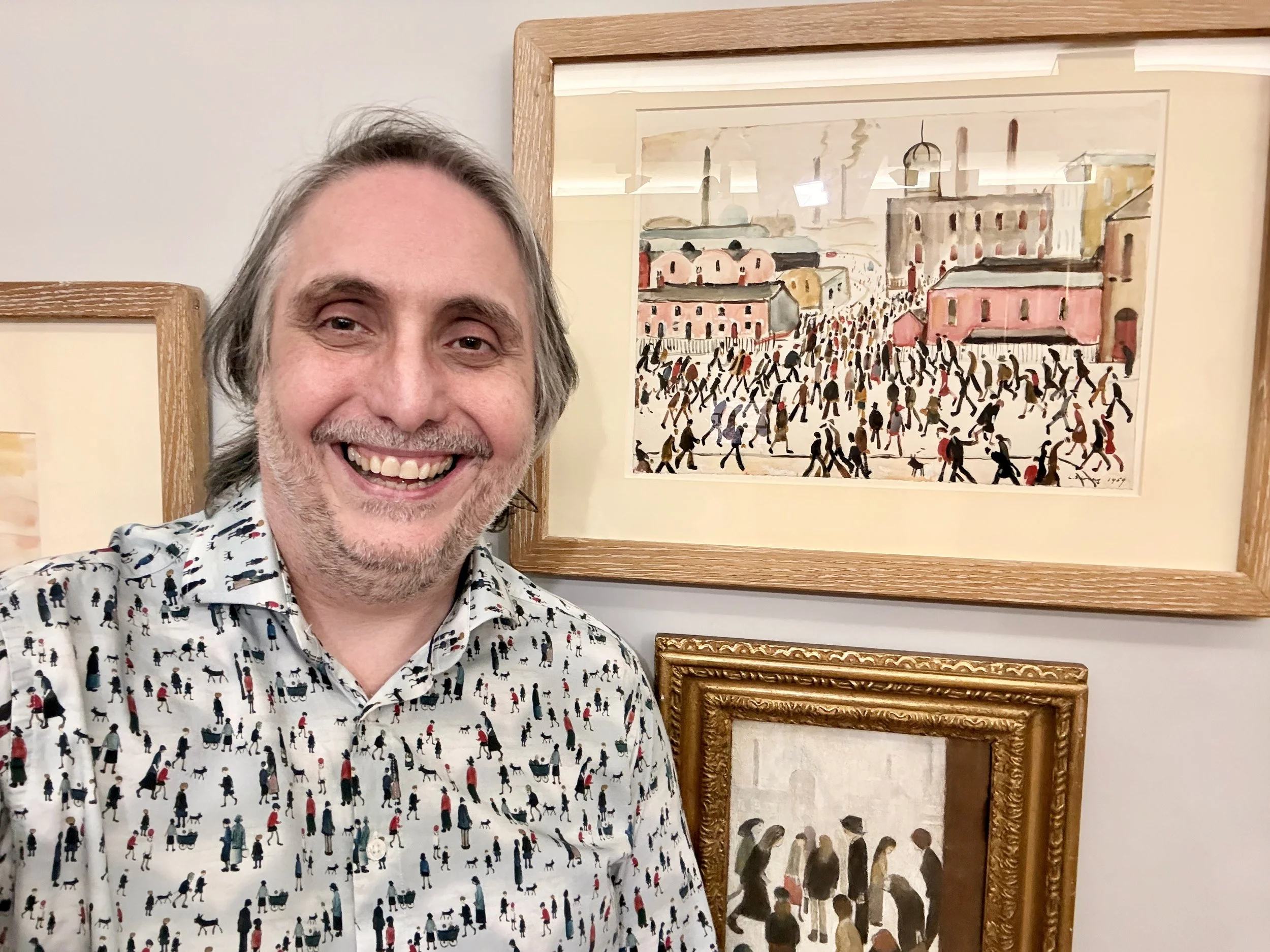
There's something quietly radical about standing in a gallery full of Lowry originals whilst wearing a shirt covered in the very same matchstick figures staring back at you from the walls. That was Thursday evening at The Andrew Law Galleries, Pier 8, Salford — and it was, frankly, brilliant.
The occasion? The official launch of Blake Mill's latest collection in collaboration with The Lowry. A private evening of art, conversation, impeccable shirts, and one of the most unexpected cultural pairings in recent memory. Think less corporate sponsorship, more genuine love letter to a man who quietly changed British art forever.
The Man Behind the Matchsticks
Before we get to the shirts (and we will — they deserve their own paragraph), let's talk about Laurence Stephen Lowry. Because most people know of him, but far fewer know the genuinely strange, quietly brilliant story of the man himself.
Here's something that rarely makes the gallery plaques: Lowry worked as a rent collector for the Pall Mall Property Company for nearly forty years. Not as a young man scraping together pennies before his big break. Continuously. Right through his critical acclaim, his growing fame, his retrospectives. He collected rent on Mondays, painted the rest of the week, and reportedly preferred it that way. He said it kept him connected to real people, to the street-level lives he painted so obsessively. The irony of a man whose art celebrated the working poor going door-to-door collecting their rent money is not lost on anyone — least of all, one suspects, Lowry himself.
Then there are the honours. He is believed to be the only person in British history to have turned down five major honours from the Crown — including the OBE, the CBE, and a knighthood. He simply wasn't interested. He didn't want the fuss. He painted because he had to, not for recognition. In a culture that sprints towards the nearest award ceremony, that's almost incomprehensible.
And his mother — the woman who appears, in spirit at least, in so many of his haunted, solitary figures — reportedly never thought much of his art. Called it "those matchstick things." Lowry cared for her until her death, and by most accounts, it broke him rather more than any critic ever could.
The "matchstick men" themselves are also wildly misunderstood. Lowry could paint. He could paint portraits of startling realism. The simplified, abstracted figures were a deliberate artistic choice — stripping people back to their essential humanity, their collective anonymity, their shared experience of just getting on with it. In that sense, every single figure in every single painting is both nobody and everybody. Which, if you think about it, is a design philosophy you could apply to a great deal more than oil on canvas.
Art That Gets Dressed in the Morning
Blake Mill have been doing something quietly remarkable for a while now: taking iconic artistic imagery and putting it on shirts that people actually want to wear. Not in a novelty-item, gift-shop kind of way. In a this is genuinely beautiful, I will wear this to important things kind of way.
The Lowry collection is the natural result of two brands that share a core belief: that great design belongs in everyday life, not behind a velvet rope.
And there's a neat symmetry here. Lowry painted ordinary people going about ordinary life — workers, mothers, children, dogs — in their everyday clothes. He elevated the mundane into something worth looking at. Blake Mill take extraordinary art and turn it into something you can actually wear on a Tuesday. Both of them, in their own way, are arguing that beauty doesn't need a special occasion.
On Thursday evening, the gallery was full of people who clearly agreed. The dress code was Blake Mill shirts — Lowry prints encouraged — and the room delivered. There is something genuinely joyful about a crowd of people wearing the same artist's work that hangs on the walls around them. It collapses the distance between observer and observed. You're not just looking at Lowry's world; you're inside it, and it's wearing you.
An Evening Worth Dressing Up For
The event itself struck exactly the right balance between formal and brilliant. Drinks on arrival. The hum of good conversation. Original Lowry works on deep purple walls. A private introduction to the collaboration — the story of how these two very different organisations found common ground in a shared obsession with an eccentric rent collector from Salford.
There was a first look at the new shirts, including a rather elegant pink Blake Mill design that drew the kind of reaction most fashion launches can only dream of. People weren't just admiring it from a distance — they wanted to try it on.
And then there was Lowry 360.
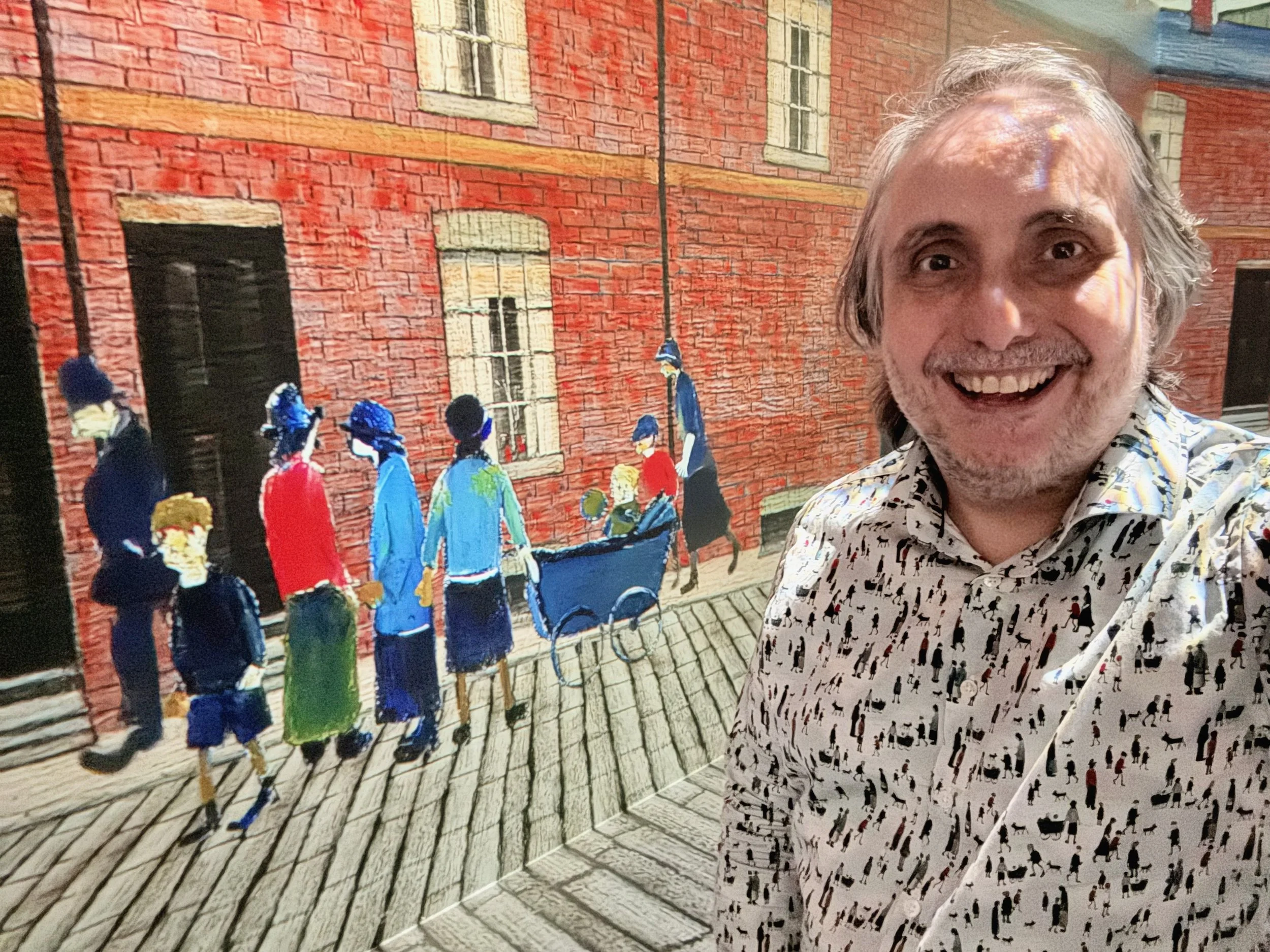
When You Step Inside the Painting
If you haven't experienced an immersive art installation, the description can sound a bit gimmicky. Floor-to-ceiling projections, wrap-around imagery, the paintings come alive, etc. You've heard it. You're sceptical. I was sceptical.
I was wrong.
Stepping into Lowry 360 is something else entirely. Lowry's figures — those thousands of small, determined, going-somewhere people — projected at scale across every surface, moving through their industrial landscapes all around you. The effect is not spectacle for its own sake. It's communion. You are no longer observing his world through a frame. You are standing in it. The mill workers pass you. The mothers with prams brush past. The dogs trot by. The smoke rises.
For a man who spent forty years watching ordinary people and translating them into something permanent, it feels like exactly the right tribute. Not a museum piece. An experience.
The Blake Mill x Lowry collection is available now. And yes — you should probably own at least one.
If this resonated, come and have a look at what we're building at designedforhumans.tech — a consultancy built around making digital experiences genuinely work for the humans using them. And if you work with design and engineering teams, take a look at systems.designedforhumans.tech — we're cutting weeks off the design-to-development handover, and it's already changing how teams work.
Paul Wilshaw is the founder of Designed for Humans and creator of Design Systems for Humans. He speaks, writes, and consults on UX, AI, and the messy overlap between the two.
#BlakeMill #Lowry #LSLowry #DesignedForHumans #Art #Manchester #Salford